
By get-ebt September 15, 2026
A search for free EBT terminal eligibility quickly produces offers that sound similar but can represent completely different arrangements.
One may be a state or EBT-contractor program available only to specific retailer categories that federal law allows USDA to exempt from ordinary equipment-cost responsibility. Another may be a commercial payment processor offering a terminal with no upfront hardware charge in exchange for maintaining a processing relationship.
Those distinctions matter. USDA’s current retailer notice states that, as a general rule, SNAP retailers must obtain and pay for their own EBT equipment and related services.
Federal law nevertheless permits exemptions for specified categories, including farmers’ markets and other direct-to-consumer markets, military commissaries, nonprofit food buying cooperatives, and certain organizations or meal programs identified in the Food and Nutrition Act.
A processor-provided terminal follows a different economic model. It may support SNAP plus credit cards, debit cards, contactless payments, and other tenders, but “free” may mean only that there is no separate upfront purchase price.
Ownership, monthly software costs, processing fees, replacement responsibilities, contract terms, and return requirements can still apply.
The useful question is therefore not simply, “Can I get a free EBT machine?” It is: Which equipment path am I actually eligible for, what can the terminal process, who owns it, what does the complete payment setup cost, and what happens if I change providers later?
Free EBT Terminal Eligibility: The Two Different “Free” Equipment Paths
The first rule of free EBT terminal eligibility is to separate government-program equipment from commercial payment equipment.
They solve the same basic checkout problem—routing an authorized SNAP transaction—but they reach the retailer through different relationships.
Path 1 is state or EBT-contractor-supplied equipment
Federal law generally places EBT POS acquisition and implementation costs on participating retailers, while allowing USDA to exempt specific retailer categories.
States and their EBT contractors may administer equipment for qualifying retailers, and particular states may add subsidies or program-specific options. Federal exemption authority does not guarantee that every qualifying organization will receive the same device under the same terms in every state.
Path 2 is a commercial processor offer
A processor, ISO, acquiring relationship, or payment-services provider may waive or absorb the upfront hardware price. The processor can still earn revenue from the merchant-processing relationship, software, other payment services, or contractually disclosed fees.
Some programs are placements in which the processor retains ownership; others provide merchant ownership; still others use conditional arrangements.
| Factor | State/EBT-Only Program | Processor Offer |
| Primary eligibility | Limited by federal exemption authority plus current state/program rules | Commercial account approval and provider terms |
| Upfront hardware cost | May be covered for a qualifying retailer | May be waived, subsidized, purchased, rented, or placed |
| SNAP EBT | Core function | Available when provider and device are properly configured |
| Credit/debit | Often unavailable on a pure program EBT device | Common on commercial multi-tender equipment |
| Equipment owner | State/contractor/program-specific | Agreement-specific |
| Return requirement | Program-specific | Common with placement equipment, but not universal |
| POS integration | Often narrower | May integrate EBT with broader retail POS functions |
| Best use case | Qualifying retailer with a relatively simple EBT need | Merchant needing SNAP plus commercial tenders or integration |
A retailer should never use the phrase “free terminal” as shorthand for “free forever, merchant-owned, unlimited-use equipment.” Those are separate questions.
Who Qualifies for a State Supplied EBT Machine?
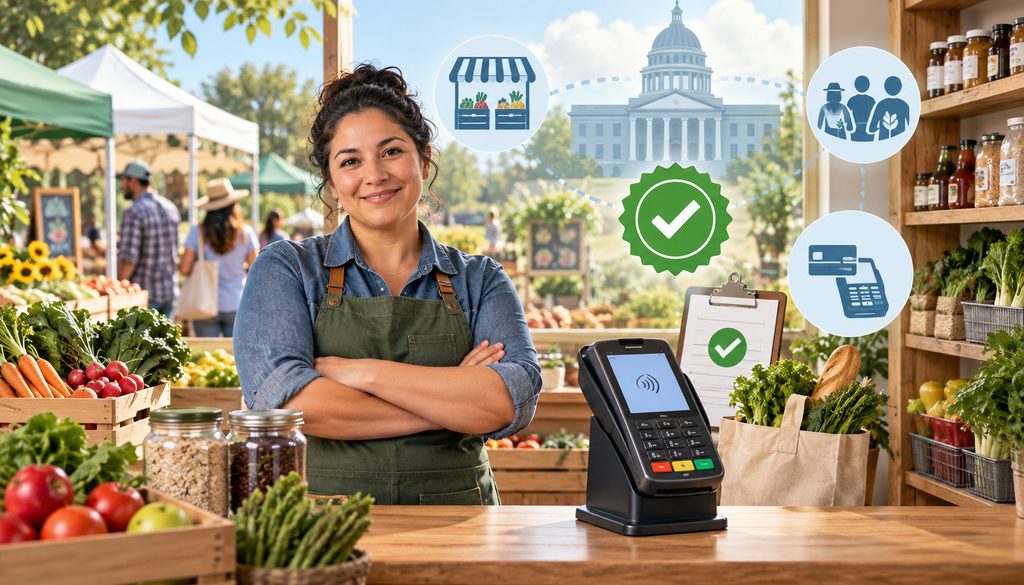
The general federal rule is important because it corrects one of the most common misunderstandings about SNAP equipment.
Under the federal EBT equipment provisions in the Food and Nutrition Act, participating retailers generally bear the cost of acquiring and implementing point-of-sale equipment and related services unless they fall within an authorized exemption. That is why SNAP authorization by itself should not be interpreted as a promise of no-cost hardware.
Federal law then gives USDA authority to exempt particular categories. Those include farmers’ markets and other direct-to-consumer markets, military commissaries, nonprofit food buying cooperatives, certain treatment programs, qualifying group living arrangements, specified shelters and meal-service establishments, and other organizations identified through cross-referenced provisions of the Food and Nutrition Act.
That does not mean a retailer in one of those categories automatically receives whatever hardware it wants.
A state supplied EBT machine is generally administered through the state’s EBT environment or an EBT contractor operating on the state’s behalf. Equipment availability, form factor, connectivity, enrollment documents, replacement procedures, and permitted transaction types can therefore differ.
State implementation can add another layer to the federal exemption framework. For example, Massachusetts currently lists subsidized SNAP processing equipment for qualifying farmers markets and direct-marketing farms, including device options that differ in mobility, connectivity, and whether commercial credit and debit payments are supported.
Its current equipment page identifies FIS stationary and mobile devices and a subsidized app-based option, and explains that exempt retailers classified by USDA as farmers markets or direct-marketing farmers may be eligible for particular subsidies.
Merchants should treat that as an illustration of how a state program can work—not as a national equipment catalog.
Exempt Retailer EBT Equipment: Farmers Markets and Other Eligible Categories
Exempt retailer EBT equipment is tied to retailer classification, not simply to a merchant wanting to reduce costs.
The clearest federal examples are farmers’ markets and other direct-to-consumer markets. The statute also recognizes military commissaries, nonprofit food buying cooperatives, and specified organizations and establishments serving particular SNAP populations.
USDA’s retailer notice summarizes the exception categories as including eligible farmers’ markets, direct-marketing farmers, military commissaries, nonprofit cooperatives or organizations, group living arrangements, treatment centers, and prepared-meal services.
Because some statutory categories depend on detailed definitions, a community organization should not assume that being “nonprofit” alone establishes exempt-equipment status. The organization must fit the applicable SNAP category and current program implementation.
| Retailer Type | Potential Equipment Exemption | What Must Be Verified | Likely Limitation |
| Farmers market | Specifically within federal exemption authority | USDA classification and current state/contractor program | Device/program may focus on EBT rather than commercial cards |
| Direct-marketing farmer/direct-to-consumer operation | May fall within exempt direct-to-consumer treatment | Exact FNS retailer classification and available state program | Mobile/location requirements may apply |
| Military commissary | Identified in federal exemption authority | Current implementing arrangement | Program-specific |
| Nonprofit food buying cooperative | Identified in federal exemption authority | Whether organization fits the SNAP definition and state program | Program-specific |
| Treatment/group-living/specified meal program | Certain categories are covered by statutory cross-references | Exact qualifying category and state implementation | Equipment capability depends on deployment |
| Ordinary grocery/convenience store | Generally no federal exemption merely for being small | Commercial equipment options | Retailer generally bears equipment/service cost |
This is why free EBT terminal eligibility should be verified from the retailer’s actual FNS classification, followed by the current state or EBT-contractor program.
Farmers Markets and Direct-Marketing Farmers Need an Extra Classification Check
Farmers markets deserve separate attention because “the market” and “a vendor at the market” are not necessarily the same SNAP retailer.
A market organization may hold an authorization and operate a centralized processing model. In another setting, individual direct-marketing farmers may have their own authorization and equipment.
Federal law also allows an exempt farmers market or direct-marketing farmer, under specified safeguards, to operate an individual EBT POS device at more than one location under the same SNAP authorization when the statutory location-information conditions are met.
For outdoor operations, connectivity matters almost as much as nominal equipment price. Cellular service, Wi-Fi availability, battery life, device transport, secure PIN entry, and the ability to identify the authorized transaction location may shape the equipment choice.
Farmers markets and direct-marketing farmers also need to plan for wireless connectivity, mobile EBT processing, receipts, scrip systems, and staff procedures because equipment that works well at a fixed store counter may not be practical at an outdoor or rotating sales location.
Does a Small Store Automatically Qualify for a Free EBT Machine?
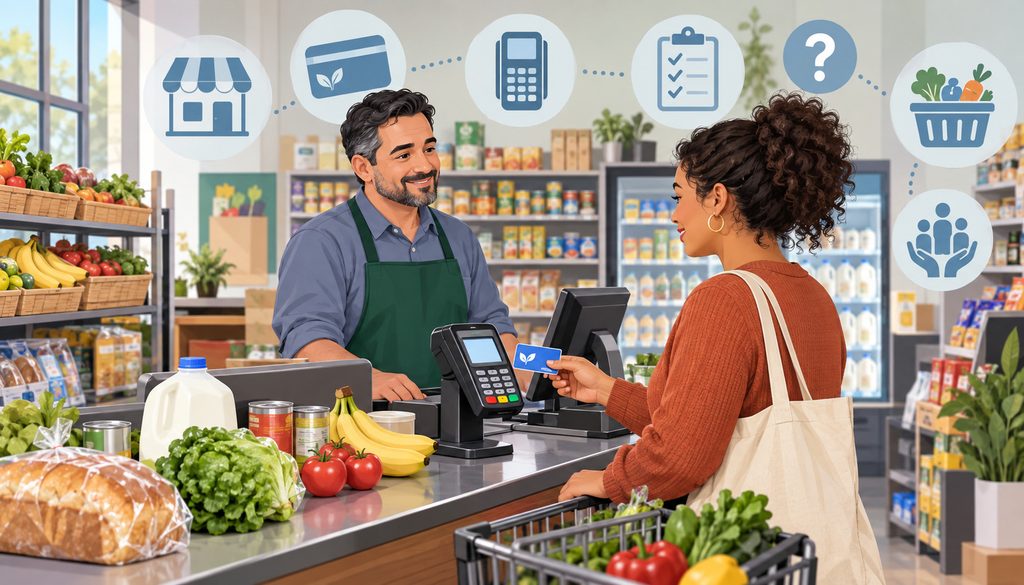
No. Current federal rules do not establish free EBT terminal eligibility merely because a store has low revenue, low SNAP volume, one checkout lane, or a small physical footprint.
This is an important correction to the common search for a free EBT machine for small store operations.
A neighborhood grocery may have lower sales than a large farmers market, yet the farmers market can fall within federal exemption authority while the conventional grocery does not. The distinction is retailer category, not simply business size.
USDA’s current notice says ordinary SNAP retailers must pay for their EBT equipment and services, while identifying the categories that may continue to qualify for exempt equipment treatment. It does not create a broad low-volume small-store exception.
A state or nonprofit initiative can separately subsidize equipment, and a payment processor may offer a commercial terminal without an upfront hardware charge. Those are legitimate possibilities, but they should not be described as a federal small-business entitlement.
A merchant searching for a free EBT machine for small store use should therefore ask three different questions:
- Does my FNS retailer classification fall within a federal exempt category?
- Does my state or its current EBT contractor actually provide no-cost or subsidized equipment to that category?
- If not, does a commercial processor offer equipment on terms that make economic sense for my store?
Before spending money on hardware, a grocery or convenience store should make sure its staple-food inventory, variety, depth-of-stock, and perishable-food stocking continue to support the retailer’s SNAP authorization. Equipment eligibility and retailer eligibility are separate issues, and receiving or buying a terminal does not correct an underlying FNS eligibility problem.
What an EBT-Only Terminal Program Can and Cannot Do
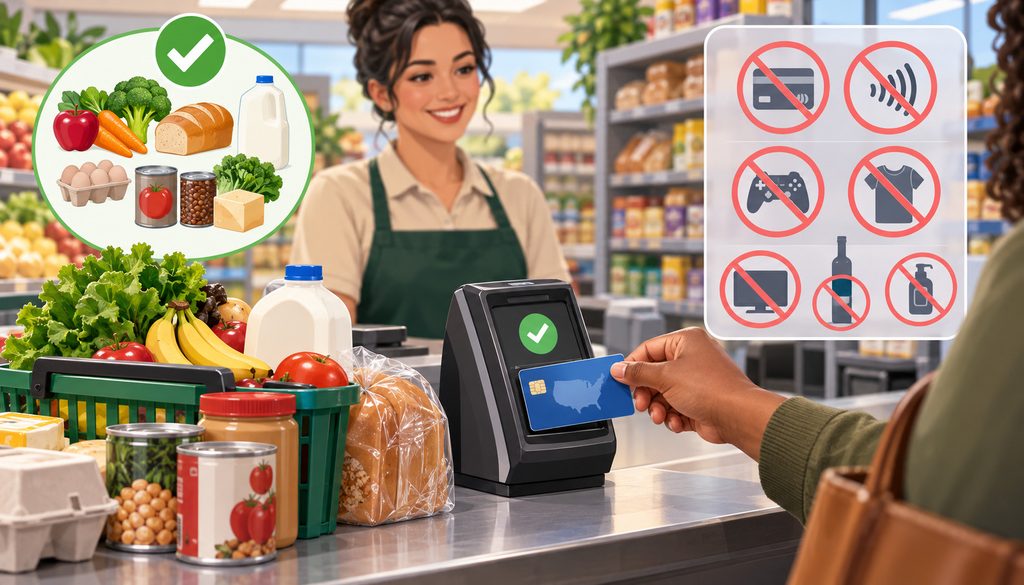
An EBT-only terminal program is designed around government benefit transactions rather than the entire checkout tender mix.
That distinction is easy to miss because an EBT terminal may physically resemble an ordinary countertop payment device. Similar housing does not mean identical programming.
A state or contractor device may support SNAP purchases and the transaction functions required by that EBT environment. Depending on the state, configuration, and retailer, a device may also support EBT cash transactions or other state-specific benefit functions. Those capabilities need to be confirmed; they should not be assumed.
A pure SNAP or EBT-only device generally should not be expected to process normal Visa, Mastercard, American Express, commercial PIN-debit, gift-card, or loyalty transactions unless the program explicitly supports those tender types.
Massachusetts’ current equipment comparison provides a useful real-world example: listed FIS devices process SNAP/HIP but not credit/debit, while a separate app option supports SNAP/HIP plus commercial card acceptance.
| Function | State/Program EBT-Only Terminal | Typical Integrated Commercial POS |
| SNAP purchase | Yes when retailer/device is properly authorized | Yes when processor/POS supports configured SNAP EBT |
| SNAP balance inquiry | Depends on applicable EBT system/device | May be supported through EBT integration |
| SNAP void/refund | Subject to SNAP and provider procedures | Subject to SNAP plus POS/processor configuration |
| EBT cash | Only where applicable and enabled | May be supported where applicable and enabled |
| Commercial credit cards | Usually no on a pure EBT-only device | Normally yes |
| Commercial PIN debit | Usually no on a pure EBT-only device | Normally yes if configured |
| Contactless commercial cards | Not a function to assume | Common on modern commercial hardware |
| Gift/loyalty | Usually outside program-terminal scope | Often available through POS software |
| Inventory integration | Usually limited | Can be tightly integrated |
| Single combined checkout report | Often limited | More achievable with an integrated POS |
The term EBT-only terminal program therefore describes an operational boundary as much as a funding model.
Split Tender Is Where That Boundary Becomes Visible
Consider a $42 basket in which $31 is eligible for SNAP and $11 must be paid using another tender.
On a fully integrated system, the register may calculate the eligible portion, send the SNAP transaction, leave the remaining balance open, and accept another tender through the same checkout environment.
With a separate EBT-only device, the cashier may need to identify the eligible amount in the register, manually enter that amount into the benefit terminal, complete the SNAP transaction, return to the register, then run the remaining $11 through another card terminal or accept cash.
Both can work. The second workflow simply has more handoffs.
Processor-Provided Free EBT Terminals: What “Free” Really Means
The commercial side of free EBT terminal eligibility has almost nothing to do with federal exempt-equipment classification.
A payment processor can choose to provide equipment at no separate upfront charge to merchants who open or maintain qualifying processing accounts. It may describe the arrangement as a free terminal, placement, complimentary hardware, terminal-on-us program, or hardware subsidy.
The device may offer substantially more functionality than state program equipment: EMV card acceptance, contactless payments, commercial PIN debit, SNAP EBT, receipt printing, Wi-Fi or cellular communication, and integration with POS software.
But there is no universal definition of a commercial “free terminal.”
A current first-party processor example illustrates why the agreement matters. Liberty Bancard’s published free-terminal terms describe equipment placement as contingent on an approved, active processing relationship; the equipment generally remains provider property unless otherwise specified, minimum-processing or contract provisions may apply, and equipment can be subject to return when the relationship ends.
That example should not be generalized to every processor. Other providers may transfer ownership immediately, subsidize a purchase, rent equipment, use lease-to-own terms, or simply discount hardware.
A merchant comparing a processor “free terminal” should obtain answers to these questions before signing:
- What exact hardware model is supplied?
- Does that specific configuration support SNAP EBT?
- Is a PIN pad included?
- Does it support chip and contactless commercial cards?
- Is a receipt printer included?
- Is software included or separately billed?
- Does cellular service cost extra?
- Who owns the equipment?
- Is it a placement, gift, purchase subsidy, lease, or conditional transfer?
- What happens if processing stops?
- Is there a minimum processing commitment?
- What replacement support is included?
Those questions are more useful than asking whether the box itself costs $0.
Ownership, Return Conditions, and Non-Return Exposure
Equipment ownership deserves its own review because the word “free” tells you almost nothing about the title.
Provider-owned placement means the merchant can use the equipment while the qualifying processing relationship remains active. The terminal is an operational tool supplied by the provider, not an asset the merchant can automatically sell, retain, or take to another processor.
Merchant-owned equipment generally means the business has purchased the device or received ownership under the applicable offer. Even then, owning the hardware does not guarantee it can be reprogrammed for every future processor.
Conditional ownership can involve a transfer after a defined period or satisfaction of contractual terms. The signed agreement controls.
Return provisions should be read with the same care as processing rates. Ask whether an RMA or return authorization is required, where the device must be sent, whether power supplies and peripherals need to be included, who pays freight, what constitutes acceptable condition, and what contractual charge applies if the hardware is not returned.
Never invent those values from another processor’s agreement. They vary widely.
EBT Processing Equipment Cost: What to Compare Beyond the Terminal
The best EBT processing equipment cost analysis begins by removing the terminal’s sticker price from center stage.
The relevant formula is:
Total equipment/payment cost = upfront hardware + recurring software/platform charges + applicable EBT processing/service charges + commercial credit/debit processing + connectivity + support/replacement + exit costs
Several categories can be zero in a particular arrangement. Others may not exist at all. The point is to compare each category separately rather than assume the term “free equipment” answers the cost question.
Federal law currently provides that no interchange fees apply to SNAP EBT transactions. The statute’s separate prohibition on state/contractor switching and routing fees was expressly written through federal fiscal year 2023, so retailers should not turn that expired clause into a blanket statement that no commercial EBT-related service charge can ever appear on a processor agreement.
A third-party processor may charge the merchant under a commercial processing or service agreement. The retailer needs to identify what each charge actually represents rather than calling every EBT-related line “interchange.”
That distinction also prevents SNAP from being confused with commercial PIN debit. SNAP EBT uses a PIN, but that does not make a SNAP transaction an ordinary debit-card transaction.
When comparing equipment offers, separate the device price from the EBT processing fees and recurring payment-service costs that can appear on a merchant statement. A terminal with no upfront hardware charge can still have a different total cost once processing, software, connectivity, or support charges are considered.
| Cost Category | State/Program Path | Commercial Processor Path | What to Verify |
| Hardware | May be covered for eligible retailers | Purchased, placed, subsidized, rented, or leased | Who owns it? |
| Software/platform | May be included or program-specific | May be separate or bundled | Monthly charge and required package |
| SNAP transaction/service cost | Depends on program/provider structure; no SNAP interchange | Contract-specific service pricing may apply | Exact contractual description |
| Credit-card processing | Not relevant on a pure EBT-only device | Commercial acquiring pricing | Rate model and card mix |
| PIN debit | Usually separate/not supported | May be offered | Do not confuse with SNAP |
| Connectivity | Program-specific | Ethernet, Wi-Fi or cellular costs may apply | SIM/data charges and redundancy |
| Support | Program-specific | Provider-specific | Replacement, help desk, shipping |
| Exit/return | Program-specific | Important for placement equipment | Return timing and non-return exposure |
Audit the Statement by Tender Type
A merchant accepting several payment types should not lump them together.
A monthly statement or accounting record may contain EBT activity, commercial debit, credit-card processing, software subscriptions, terminal fees, PCI-related card-processing charges, gateway services, and connectivity.
Those items serve different purposes.
| Statement Line | What It May Represent | What to Verify |
| EBT processing/service fee | Provider service associated with EBT acceptance | Contract basis; do not label it SNAP interchange automatically |
| Monthly terminal charge | Hardware rental, placement-related fee, or software bundle | Whether the “free terminal” excludes this charge |
| PIN-debit fee | Commercial debit processing | Confirm it is not being confused with SNAP |
| PCI/compliance fee | Commercial card-processing program | Scope and whether it relates to card acceptance rather than SNAP |
| Gateway/POS fee | Software or transaction connectivity | Whether required for the chosen integration |
| Cellular/data fee | Wireless communication | Whether included with the device |
| Replacement/shipping | Hardware support | Warranty versus merchant-caused damage |
A conceptual cost worksheet can be even more useful:
| Cost Category | State EBT Path | Processor Path | Actual Monthly Cost |
| Hardware | |||
| Software/platform | |||
| EBT processing/service | |||
| Credit/debit | N/A or separate | ||
| Connectivity | |||
| Support/replacement | |||
| Exit/return exposure |
When an EBT-Only Device Starts Costing You Sales
An EBT-only terminal program can be entirely appropriate for a retailer with a narrow transaction mix. The operational ceiling becomes more noticeable when the store grows beyond that use case.
Imagine a farmers market booth where nearly every electronic transaction is SNAP. A subsidized mobile EBT device may be an excellent fit.
Now imagine a neighborhood grocery with two busy lanes, significant credit-card volume, commercial PIN debit, a loyalty program, inventory tracking, and frequent split-tender purchases. A separate state EBT terminal at one counter could create a queue even if its direct hardware cost is zero.
The potential friction includes:
- keying the SNAP amount into a second device;
- managing two receipts;
- switching between POS and EBT terminal screens;
- moving customers between lanes if only one terminal supports EBT;
- reconciling stand-beside EBT totals separately;
- completing a second payment for non-SNAP items;
- training new cashiers on multiple workflows; and
- handling terminal downtime without an integrated lane fallback.
This is not an argument against a state supplied EBT machine. It is a reminder that equipment price and checkout cost are not identical.
Multi-lane stores should also consider redundancy. One no-cost device may be sufficient from an eligibility standpoint yet become an operational bottleneck when several SNAP customers reach checkout at once.
Replacement policy matters too. Ask the state contractor or commercial provider who owns failed hardware, how support is initiated, whether troubleshooting is remote, whether replacement is an advance swap or return-first process, whether shipping is covered, and whether spare devices are available.
Stores with higher transaction volume may benefit from managing EBT transactions through an integrated POS workflow, particularly when separate EBT equipment would otherwise require cashiers to key amounts twice, manage multiple receipts, or reconcile transactions across different devices.
Security and PCI Scope Are Different Questions
A pure SNAP EBT terminal and a multi-tender commercial terminal do not necessarily place the retailer in the same payment-data environment.
Commercial credit and debit acceptance introduces payment-card security obligations associated with that card-processing environment. SNAP EBT also has its own security, PIN, transaction, and system requirements.
Do not infer that a merchant has “no security obligations” merely because it uses EBT-only equipment, and do not assume an integrated terminal makes SNAP and commercial cards the same transaction type.
The systems may share physical hardware while remaining logically and financially distinct.
How to Switch From State Equipment to an Integrated Processor Terminal
A growing retailer does not normally need to abandon its federal authorization merely because its original equipment path no longer fits.
This is one of the most useful free EBT terminal eligibility principles to understand: FNS authorizes the retailer; the state EBT environment and payment providers enable transaction access.
Federal EBT regulations contemplate retailers using third-party processors, and state systems receive retailer authorization information used to ensure that only currently authorized retailers access SNAP EBT. Regulations also distinguish state-equipped retailers from merchants using third-party processors.
A terminal change is therefore not automatically a new SNAP retailer application.
Ownership changes, business changes, relocation, or other changes affecting the authorization itself can be different. Those should be handled under current FNS instructions rather than treated as a simple equipment swap.
A typical migration from a state or program device to commercial processing looks like this:
- Confirm the store’s FNS authorization remains active.
- Select a processor and POS solution that can support SNAP EBT in the store’s state.
- Verify the specific hardware and software configuration.
- Supply the processor with the FNS retailer information through its secure onboarding process.
- Complete any processor/state technical enrollment or certification steps required for the configuration.
- Enable the SNAP tender.
- Test it before the old path is shut down.
- Confirm purchase, balance, reversal/void, receipt, and split-tender workflows as applicable.
- Stop using the old terminal only after the new environment is functioning.
- Follow the old program’s deactivation and equipment-return instructions.
- Reconcile outstanding deposits and final batches.
- Retain FNS authorization and provider records.
When replacing an older terminal or changing providers, the transition should preserve EBT payment-processing setup, testing, staff training, and transaction continuity so the existing device is not shut down before the replacement path is ready for live SNAP transactions.
| Step | Old Path | New Path | Authorization Impact |
| Verify status | Confirm retailer is active | Processor confirms onboarding data | Normally no new authorization merely for equipment change |
| Configure | Existing state/program terminal remains available | New EBT tender configured | FNS retailer identity remains essential |
| Test | Continue old processing until ready | Test new route/device | Avoid preventable acceptance outage |
| Cut over | Stop new transactions on old equipment | Begin production processing | Equipment change itself does not transfer ownership/location |
| Close hardware | Deactivate/return if required | Retain new device per agreement | Follow old equipment terms |
| Reconcile | Review final settlements | Review initial settlements | Keep authorization and transaction records organized |
Which Equipment Path Fits Your Store?
Choosing equipment should start with the retailer’s tender mix rather than its preference for a $0 hardware invoice.
The most useful decision criteria are retailer classification, expected SNAP volume, commercial card volume, number of checkout lanes, mobility, split-tender frequency, reporting needs, POS integration, connectivity, equipment ownership, replacement service, and total cost.
| Store Profile | Likely Best-Fit Path | Why | Verify Before Choosing |
| SNAP-authorized farmers market | State/exempt or subsidized option if currently eligible | Can reduce cost for market-focused SNAP acceptance | Current classification, subsidy, connectivity, market/vender model |
| Direct-marketing farmer | State/subsidized mobile option if eligible | Mobility can matter more than full retail POS integration | Device location rules and cellular service |
| Small grocery already taking cards | Integrated commercial terminal often operationally attractive | One checkout environment can handle multiple tenders | EBT support, ownership, processing terms |
| Very simple SNAP-focused operation | EBT-only device may fit | Limited tender requirements | Actual exempt-equipment eligibility |
| Growing multi-lane grocery | Integrated POS commonly offers better workflow | Lane speed, reporting and inventory integration | Certification, implementation cost, redundancy |
| Nonprofit buying cooperative | Check exempt-equipment route first | Federal exemption authority may be relevant | Exact FNS category and state program availability |
There is no universal winner.
A retailer whose card volume is negligible can reasonably value a no-cost EBT-only solution more highly than POS integration. A busy store can reasonably conclude that an owned or processor-provided commercial device produces lower operational cost despite a higher nominal equipment expense.
That is why free EBT terminal eligibility and “best equipment” are related but different decisions.
Common Free EBT Terminal Mistakes
Most equipment problems begin with an assumption that was never verified.
| Mistake | Cost or Operational Risk | Better Approach |
| Assuming every SNAP retailer gets government equipment | Unexpected equipment purchase/service expense | Verify retailer classification and current state program first |
| Assuming small size creates an exemption | Delayed opening or wrong budgeting | Treat a free EBT machine for small store as something to verify, not an entitlement |
| Choosing EBT-only without testing card workflow | Slower split tender and additional equipment | Model actual customer baskets |
| Treating processor placement as merchant ownership | Return charge or dispute at cancellation | Read title and return clauses |
| Comparing only hardware price | Higher long-term software/processing cost can be missed | Calculate total cost |
| Calling all PIN transactions “debit” | Accounting and fee confusion | Keep SNAP EBT and commercial PIN debit separate |
| Ignoring connectivity | Failed mobile or backup transactions | Confirm Ethernet/Wi-Fi/cellular requirements |
| Reapplying for SNAP solely because a processor changed | Unnecessary disruption and administrative confusion | Separate authorization issues from processor configuration |
| Disconnecting old device too early | Temporary inability to accept SNAP | Test new path before cutoff |
| Assuming one terminal is enough for any store | Lane bottleneck | Compare peak checkout demand and redundancy |
The recurring lesson is that equipment is an operating system, not merely a box on the counter.
Free EBT Terminal Eligibility and Equipment Checklist
Use this checklist before accepting either a state program device or a processor offer.
State/Exempt Equipment Review
- Confirm that SNAP/FNS authorization is active before live SNAP transactions begin.
- Identify the exact FNS retailer category.
- Check current USDA equipment-cost rules.
- Identify the current state EBT contractor.
- Confirm whether the retailer category participates in a current state or contractor no-cost/subsidized program.
- Obtain written eligibility confirmation where available.
- Confirm whether the terminal is EBT-only.
- Confirm SNAP purchase capability.
- Confirm balance-inquiry functionality.
- Confirm refund/void procedures.
- Confirm whether EBT cash transactions are supported and relevant.
- Confirm connectivity requirements.
- Confirm whether cellular service is included.
- Confirm equipment ownership.
- Confirm replacement and repair procedures.
- Confirm whether equipment must be returned.
- Confirm device-location requirements for mobile operations.
- Confirm what happens if the retailer moves to a commercial processor.
Commercial Processor Review
- Confirm device manufacturer and model.
- Confirm SNAP EBT capability on the actual configuration.
- Confirm commercial credit capability.
- Confirm commercial PIN-debit capability.
- Confirm contactless capability.
- Confirm PIN-entry hardware.
- Confirm POS integration.
- Confirm who owns the hardware.
- Identify any contract term.
- Identify recurring terminal or software charges.
- Identify connectivity charges.
- Review commercial card pricing.
- Review the EBT-related pricing separately.
- Identify minimum processing or account requirements.
- Review replacement and warranty support.
- Review cancellation provisions.
- Confirm return instructions.
- Confirm non-return exposure.
- Confirm whether peripherals must also be returned.
Operational Review
- Estimate SNAP transaction volume.
- Estimate commercial card/debit volume.
- Measure split-tender frequency.
- Determine lane count.
- Evaluate peak checkout volume.
- Determine whether mobility is required.
- Compare separate versus integrated receipts.
- Compare reconciliation workflows.
- Confirm backup/replacement strategy.
- Test EBT before go-live.
- Train cashiers.
- Review the first month of settlements.
- Reevaluate the setup as volume grows.
The central free EBT terminal eligibility question can be reduced to one sentence:
Who owns the terminal, what transactions can it run, what recurring costs apply, what happens when I leave, and do I actually qualify for the no-cost state or contractor program?
Practical 25-Step Equipment Decision Workflow
- Obtain or confirm active FNS SNAP retailer authorization.
- Identify the exact retailer type shown in the relevant authorization/program records.
- Check current federal exempt-equipment authority.
- Identify the state EBT contractor.
- Ask whether that retailer classification qualifies for current no-cost or subsidized equipment.
- Get the eligibility answer and program terms in writing where possible.
- Confirm which SNAP/EBT transaction types the device handles.
- Check whether EBT cash is relevant and supported.
- Estimate monthly SNAP volume.
- Estimate commercial credit and debit volume.
- Estimate split-tender frequency.
- Determine whether a separate EBT-only device will be operationally sufficient.
- If multi-tender capability is needed, request a commercial processor quote.
- Compare the exact hardware model.
- Compare equipment ownership.
- Compare recurring software/platform costs.
- Compare EBT-related service pricing.
- Compare commercial credit/debit pricing separately.
- Compare cellular, broadband, or other connectivity costs.
- Compare support, repair, replacement, and shipping provisions.
- Compare cancellation, return, and non-return terms.
- Configure the authorized FNS retailer information through the applicable provider process.
- Test SNAP transactions and train employees.
- Reconcile the first month and reevaluate as lane count or volume changes.
- If switching later, activate and test the replacement path before properly deactivating or returning old equipment.
Frequently Asked Questions
Who qualifies for a free EBT terminal?
Free EBT terminal eligibility depends on what kind of “free” terminal is being discussed.
Federal law generally requires SNAP retailers to bear their EBT equipment costs but permits USDA to exempt specified categories, including farmers markets and other direct-to-consumer markets, military commissaries, nonprofit food buying cooperatives, and certain defined programs and establishments.
State or contractor programs determine what equipment is actually available to qualifying retailers. Commercial processors can separately offer no-upfront-cost equipment based on their own account and contract requirements.
Does every SNAP-authorized store get a free EBT machine?
No.
FNS authorization gives the retailer federal permission to participate in SNAP. It does not create a universal entitlement to free equipment. USDA’s retailer notice states that ordinary retailers are responsible for their equipment and services except where exempt treatment applies.
What is a state supplied EBT machine?
A state supplied EBT machine is equipment made available through a state EBT program or its contractor under that program’s terms.
It may be available without a merchant hardware purchase to retailers qualifying under the applicable exemption or subsidy rules. Device type, communications method, ownership, support, and permitted transaction functions depend on the state deployment.
Which retailers qualify for exempt retailer EBT equipment?
Federal exemption authority includes farmers markets and other direct-to-consumer markets, military commissaries, nonprofit food buying cooperatives, and specific treatment, group-living, shelter, meal-service, and related categories defined by statute.
Actual exempt retailer EBT equipment availability must then be confirmed under the state or contractor program. Being a nonprofit or small retailer does not, by itself, prove qualification.
Do farmers markets qualify for free EBT equipment?
Farmers markets are expressly within federal exemption authority, but a particular market should still verify its FNS classification and its state’s current equipment program.
Some states actively subsidize qualifying market equipment. Massachusetts, for example, currently lists subsidized/free options for qualifying farmers markets and direct-marketing farms.
Does a small grocery store automatically qualify for a free EBT machine?
No. Searching for a free EBT machine for small store use can be misleading because federal exemption authority is not based simply on square footage, revenue, or low SNAP volume. An ordinary small grocery may instead need commercial EBT-capable equipment unless another current subsidy applies.
What is an EBT-only terminal program?
An EBT-only terminal program supplies or configures equipment primarily for EBT transactions rather than ordinary commercial payment cards.
The exact device can vary, but merchants should not assume that an EBT-only terminal will also accept Visa, Mastercard, commercial PIN debit, contactless cards, gift cards, or loyalty tenders.
Can an EBT-only terminal take credit cards?
A pure EBT-only device generally does not.
Some hardware platforms can technically support multiple payment applications, but what matters is how the device is configured under the actual program. Verify the deployed device rather than assuming capability from its physical appearance.
Can an EBT-only terminal take debit cards?
Do not assume so.
SNAP EBT requires PIN entry, but SNAP is not the same payment product as commercial PIN debit. A multi-tender commercial terminal may process both, while an EBT-only terminal may not process commercial debit at all.
What does a processor-provided free terminal actually include?
It depends on the agreement.
A processor may waive the hardware purchase price yet have separate processing, software, connectivity, support, account, or other contractual economics. The terminal can also remain provider-owned and require return when the processing relationship ends.
Who owns a free processor terminal?
There is no universal rule.
Some providers use terminal placement and retain ownership. Others transfer ownership, subsidize a purchase, or use conditional ownership. Read the signed equipment provision rather than relying on the word “free” in an advertisement.
What EBT processing equipment costs should I compare?
An EBT processing equipment cost review should include hardware, recurring software, EBT-related service charges, connectivity, support, replacement, and exit/return exposure.
If the same provider also handles commercial cards, analyze credit and debit processing separately rather than burying those costs inside one monthly total.
Are SNAP EBT transactions charged the same as debit-card transactions?
No. They are different transaction types.
Federal law states that SNAP EBT transactions do not carry interchange fees. A retailer may nevertheless have commercial processor or service pricing under its agreement, while ordinary commercial PIN debit follows its own payment-network economics.
Can I switch from a state EBT terminal to an integrated POS later?
Often, yes.
The merchant should confirm that the replacement processor supports SNAP EBT in the relevant state, configure the retailer information correctly, test the new equipment, and then follow the state program’s rules for deactivating or returning the original terminal.
Will changing processors make me lose SNAP authorization?
A processor change alone does not automatically cancel the store’s federal SNAP authorization.
The equipment/provider relationship and FNS retailer authorization are separate. Changes in ownership, location, business structure, or other facts material to FNS authorization require their own analysis, so retailers should keep those issues separate from a routine terminal or processor migration.
Conclusion
A “free EBT terminal” is not one national benefit, which is why free EBT terminal eligibility needs to be evaluated before equipment is ordered.
Most ordinary SNAP retailers are responsible for obtaining their EBT equipment and services. Federal law permits exemptions for specified retailer categories, and states or EBT contractors may provide no-cost or subsidized devices to qualifying operations such as eligible farmers markets and direct-marketing farmers. Small size or low sales volume alone does not create that federal entitlement.
Those program devices can be an excellent fit when a retailer mainly needs SNAP acceptance. Their limitation is that a pure EBT-only terminal may not provide ordinary credit, debit, contactless, inventory, or integrated checkout functionality.
Commercial processor equipment can solve those limitations, but “free” hardware still needs a contract review. Ownership, recurring software, commercial processing economics, connectivity, replacement support, cancellation, and return terms can matter more than the upfront price.
The strongest equipment decision therefore compares total cost with actual checkout workflow.
And as a retailer grows, it can often move from program equipment to an integrated processor solution without abandoning its existing FNS authorization simply because the hardware changes. The safer approach is to configure and test the new path first, preserve the retailer’s authorization records, and close out the old equipment according to its actual terms.